
Saturday, September 6, 2014
Active Isolated Stretch
I've have the best opportunity to take the 32 hour Active Isolated Stretch seminar in Bradenton, FL. It consisted of four consecutive 9 hour days of hands on learning with the infamous, Aaron Mattes. This guys has written numerous books on how increasing flexibility leads to a decrease chronic conditions and cardiovascular disease. Most artificial joint replacements are unsuccessful, and other surgeries that claim to fix a symptom only create other problems. Medical science is failing the general population, and it's up to the therapist, trainers, and other allied health professions to bring back the hands-on approach.
Active Isolated Stretch is a technique, where the trainer assists the client through a ROM (stretch) while giving a 2 second assisted stretch at the end range. Afterwards, the client relaxes the muscle and does the same stretch into a new ROM. Does it hurt? One should not experience no more than mild discomfort. Individuals say they have "tears of joy".
I have been practicing my technique for 3 weeks now, and I must say it has given me great results. First, I should tell you about my history: I was in a car accident while doing clinical rotation in graduate school in 2007. I sustained whiplash on the left side of my neck, which radiated down my arm. I have suffered with the pain ever since to where I couldn't sleep on the left side. Physical therapy, massage, foam rollers, pain meds, would only give me 2-3 hours of relief. I thought I would have to live with the pain, and eventually get cortisone injections. But none of those techniques gave enough effect to change the pain cycle of what was triggering the muscle to spasm in the first place. Due to poor circulation (oxygen), poor flexibility, and lack of strength will cause a muscle or joint to become dysfunctional. Dysfunction causes pain, and then the body starts to compensate for the lack of movement. Next thing, is "bone on bone" arthritis, tendonitis (which is what I have), or other chronic conditions.
I was going to a seminar to learn how to treat my clients, not myself. While some student were practicing on me, my left shoulder/neck started to flare up again. Once Aaron Mattes, took me through 4-5 different stretches and gave a slight manipulation, I was pain-free! No joke. It was like magic. I knew right then, that this was something everyone should experience. All my clients have some sort of pain (that's why they hire me), and its my job to help them out.
Here are some videos of what I was learning. Once I become proficient I'll load some of myself:

Monday, December 16, 2013
How to curb Holiday Drinking
Can I drink and lose weight?

It’s that time of year, when friends and family gather and alcohol is involved. It’s hard to say “no” when that is one of the reasons everyone is gathering in the first place. But, when you’re trying to lose weight, alcohol becomes your number one enemy. Alcohol is what we call “empty calories”. Meaning, it has no nutritional value and can be very high in calories. Not only that, the body sees it as a toxin, and will do whatever it takes to get rid of it as soon as possible. Your liver works overtime to process the waste as it absorbs in the bloodstream. Sometimes, the balance is tilted and more alcohol enters the body faster than the liver can process it, and that’s when we run into trouble. Essentially, it stops all other metabolic processes and digestion of other foods that we may have eaten earlier, and stores it. This leads to bloating, weight gain, poor decision making, visual imparities, slurring, etc.
The abundance of calories in the drinks is what directly affects your weight loss. When your body is too busy processing the alcohol, it leaves the carbohydrates and fats to stay stored in your body converting to permanent body fat.
Here are examples of typical drinks that are served at parties and the amount of calories they consist of:
20- ounce beer- 250 calories
One glass of Red or White wine- 120 calories
Margarita- 270 calories
1.5 ounce shot of scotch- 112 calories
1 ounce shot of vodka- 100 calories
Cosmopolitan - 230 calories
So what should I drink? If, I have to!!
Well, if you want to indulge in a drink (or two...), according to the above chart, wine or vodka with a club soda and lime is your best bet.
Happy Holidays! and Happy New Year!
Monday, June 24, 2013
Yummy Summer Recipe

*Quick and easy summer sauté- Add Tofu or Chicken for added protein
Ingredients-
1 tablespoon canola oil
1/2 cup chopped green onions (about 3-4)
1 garlic clove, minced
1 cup sliced fresh okra (about 4 ounces)
1 cup chopped red or yellow bell pepper (about 1)
1 finely chopped seeded jalapeño pepper
1 cup fresh corn kernels (about 2 ears)
1 ½ cup of either green beans or snapped peas (fresh is preferred)
1 (15-ounce) can of low sodium black beans, rinsed and drained
1/3 cup minced fresh cilantro
1/8 teaspoon salt (sea or conventional)
1/8 teaspoon freshly ground black pepper
Preparation
Begin by heating oil in a large nonstick skillet on medium-high heat.
Add onions and garlic; sauté 1 minute
*If adding Tofu or Chicken add now- cook each according
Add okra; sauté 3 minutes
Then reduce heat to medium
Add bell pepper and jalapeño; cook 5 minutes
Add corn; cook 5 minutes.
Stir in beans; cook 2-3 minutes
Stir in cilantro; sprinkle with salt and black pepper
Tuesday, April 9, 2013
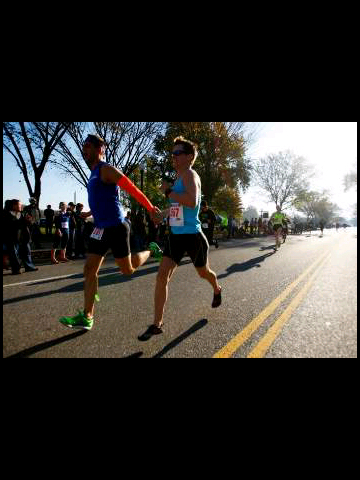
Building a friendship with each passing mile.

Much has been written about the benefits of running with friends but I have to admit, I never totally bought into it. I was always content in the fact that running was my solace for the demands of everyday life. What I did when I needed me time. After years of running occasionally with groups and sporadically with friends it has finally hit me.It was not just about how many miles I ran or what pace I was at for each distance but the sharing of the experience. I am not speaking about race day; that can be a different story. I am referring to training and general fitness running.
I had begun to wean in my running schedule and found my runs far less fulfilling. Then a cyclist friend came to me and expressed interest in triathlons but they had not run, in there words, in years. Suddenly, I found myself more focused during our runs and developing greater motivation. There were runs where we spent the entire run decompressing, other had fewer words but the sound of our footsteps. I not only increase my mileage, boosted my running enjoyment but I built a deeper, and invaluable friendship that has extended past the pavement.
Wednesday, January 9, 2013
Running for life or death?
As an endurance athlete, I was startled by the Wall Street Journal article "When Running Is Bad for You"/ "One Running Shoe in the Grave". Not only because of it's alarming title; it struck a nerve within me as well as cause quite a stir in my running group. The article was also brought up by several clients and members of the group, when they asked my opinion on this issue. There where so many in fact, that it prompted me to delve into the article further and attempt to truly understand the potential dangers we face.
Initially, when I read the article I noticed that all of the photos where of Triathlons which is an entirely different entity then marathon running solely. A slight digression, I know, but an interesting selection by the author. The primary study referenced in the Wall Street Journal, is an editorial published in the British Journal Heart. The British Journal Heart is an international peer review journal for professionals in the health care field. In a brief, The Wall Street Journal article, focuses on the new research metrics that are being tested on "Older" athletes, that are not competing solely in running events.The author discusses how previous research measured primarily the number of deaths during races. While the new research focuses on the negative impact it has on the longevity of runners as they age, specifically those who run over 25 miles a week. The article included an opinion from two different Sports Cardiologist, one of which authored the paper. The other cardiologist, is a former elite marathon runner, opposes the new research. He believes the researchers are "manipulating the data" as well as strictly focusing there research on association as a runner. Thus, overlooking other potential causes for the negative findings like, pre-existing conditions or diseases. While both sides of the research have valid points, for me the article comes down to reconciling in some way my conflicting passions. I will have to both agree and disagree with the findings. Tempering my athletic brain with my training profession, so that can both advocate caution to some while, half heartily accepting them for my own training philosophy.
At the end of the day for me; running/training goes way beyond what health benefits I receive; it speaks to my soul. Every time the ever popular "GO" word is uttered it ignites my competitive drive and urges me forward even when the finish line is invisible.
Tuesday, January 8, 2013
10 ways to stay fit at work
Top 10 ways to stay healthy at work
Now that the holidays are over, it’s time to get back to the
business of life. This New Year start by making small and meaningful changes in
your lifestyle that will help you achieve your health and fitness goals.
Despite the fact that Americans work more than any
industrialized country in the world, we take fewer vacations, retire older and
work longer days. This alone can impact ones health and can lead them to
chronic conditions like high blood pressure, arthritis, depression and obesity.
The average American works 35-45 hours a week, and in cities with larger
populations, it can be as high as 50 hours!
You need to decide that fitness and wellness are important
to you and then take measured steps towards your goal. Don’t over extend
yourself and exercise like never before to achieve your fitness and wellness
goals. This year try to do something different...

1 1. Meal planning and portion control
80% of losing weight depends on your diet.
The science is simple “calories in, calories out”. The objective is to burn
more calories than you consume. Try to plan your lunches and dinners so that
you don’t over eat. Even if you have a client meeting at a restaurant, look up
their menus in advance or ask the waiter to “put the sauce on the side” or have
it “grilled instead of fried”. Portion control is important because without it,
you are more likely to over eat. Having visual cues on how much a serving of
veggies or rice looks like can help you make better decisions. For example, one
cup of rice or pasta is the size of a tennis ball.
2. Stretching
Sitting at a desk for more than 2 hours at
a time causes the muscles, ligaments, and tendons to become shorter. Do simple
stretches at your desk to help elongate the muscles and decrease pain
(especially back pain). Tight hamstrings can be a precursor to low back pain,
and tight shoulders can lead to neck pain or migraines.
3. Organize a boot camp/ fitness class
Grab a group of buddies and organize a
fitness class. With camaraderie and moral support, you can achieve weight loss
together. Select a certain date, time, and location to meet up and work out for
an hour.
4. Take stairs, or go for a walk
If you’re not experiencing any hip, knee,
or ankle pain, then taking the stairs instead of the elevator is a great way to
improve cardiovascular endurance and build up the strength in your legs. Taking
walks throughout the day are great as well, but with less impact on the knees.
5 . Set your workstation to improve your
posture
Setting up your work space can help prevent
back and neck pain, tight muscles, and poor posture. Modifying the sitting posture in an office chair can work
wonders for your muscles and joints. Utilize the lumbar support in your office
chair and position the computer at eye level so you’re looking straight ahead.
6. Exercise in your office (planks, jumping
jacks, pushups, squats)
If possible, try doing some circuit
training in your office for 30 minutes a day. It can improve your fitness
levels tremendously. Here is an example circuit that should take less than 30
minutes to complete and uses no weights or machines: 1 min plank hold (a plank
is when you are lying face down with elbows under shoulder and toes/knees on
the floor, pull yourself up and keep your core tight) 1 min jumping jacks, 15 pushups (on or off knees), and 15-
20 squats (pretend you are sitting back in a chair and standing up). Rest for 1
mins and repeat 3 more times.
7. Hire a trainer
If you’re new to exercise and you don’t
want to hurt yourself or you’re pressed for time, then a trainer is what you
need. Find an experienced trainer who can travel to your job and kick your butt
for an hour. This is a great way to get in shape fast with fewer injuries! The
trainer should monitor your diet, correct your form, and provide you with
homework that you can do on your off days to speed up the process.
8. Avoid temptations (holiday cookies, snacks)
Encourage co-workers to bring healthy
snacks, or organize a healthy happy hour. This leads back to meal planning and
having a back-up snack, like fruit, in case you have a sweet tooth during the
middle of your day.
9. Park your car further away, or bike /walk
to work
These are simple ways to get more exercise
in by moving more to improve your cardiovascular endurance and decrease obesity.
Here in the district, there is a bike share program you can take advantage of.

10. Start a
“Biggest Loser Contest” or any other weight loss competition.
This gets your competitive spirit involved.
It’s simple biology that humans are competitive beings. Just think of sports,
politics, and jobs, we love to win! So
getting everyone’s competitive juices flowing is a sure way to weight loss
success. Having a cash prize or tickets to an important event will even get the
laziest person to try to lose weight while having fun doing it.
Friday, November 23, 2012
Holiday Recipes

Vegan and Gluten Free
Brown Rice Salad with Roasted Butternut Squash, Chestnuts, and CranberriesServes 4
30 minutes or fewer
Brown rice and butternut squash make this salad filling but not overly heavy.
· 1 12-oz. pkg. cut butternut squash
· ½ or (1/2 cup) red onion, chopped (½ cup)
· 3 Tbs. olive oil
· 1 6.5-oz. jar cooked chestnuts, coarsely chopped
· 1 cooked brown rice (2 cups)
· 1 tsp. grated lemon zest
· 1½ Tbs. balsamic vinegar
· ½ cup fresh or frozen Cranberries (dried Cherries maybe substituted)
· 1 5-oz. bag arugula, coarsely chopped
1. Preheat oven to 475°F. Line rimmed baking sheet with parchment paper. Toss together butternut squash, onion, and 2 Tbs. Olive oil in large bowl. (If desired Season with salt and pepper) Roast squash 15 to 20 minutes, or until tender, stirring occasionally. Add chestnuts during last 5 minutes of baking.
2. Meanwhile, warm rice according to package directions, and toss with lemon zest in large bowl. Whisk remaining 1 Tbs. oil with vinegar in small bowl. Pour vinegar mixture over rice, and add pomegranate seeds. Stir in warm squash mixture. (Seasoning with any combination of salt, pepper, cayenne or thyme) Fold in chopped arugula, and serve.
Chocolate Basil Cake with basil buttercream frosting
Nonstick baking spray with flour
1 cup sugar
1 cup packed fresh basil leaves (plus addition leaves for garnish)
5 tablespoons unsalted butter
1/2 cup unsweetened cocoa powder (not Dutch process)
2 large eggs
1/2 teaspoon baking soda
1 and 1/2 teaspoons vanilla extract
1/4 teaspoon salt
3/4 cup all-purpose flour
1/2 cup hot water
Preheat oven to 350°F. Spray a 9-inch round cake pan with nonstick baking spray with flour.
Place the sugar and basil in a food processor. Process until basil is chopped fine and uniformly green in color (it will look slightly wet).
In a large bowl whisk the melted butter, cocoa powder and basil sugar until well-blended. Whisk in the eggs, 1 at a time, until blended and smooth. Stir in the baking soda, vanilla, and salt.
Gradually add flour to bowl, stirring just until blended (do not over stir). Add hot water to mixture, stirring just until blended. Pour batter into prepared pan.
Bake 22-25 minutes or until a wooden pick inserted in center comes out clean. Cool 10 minutes on a wire rack. Sprinkle with powdered sugar. Cut into squares. Cool completely, Prepare sour cream frosting. Spread over cake and garnish with basil leaves, if desired. Makes 9 servings (serving size: 1 wedge).
Basil Buttercream (vanilla bean blog)
1 1/2 cups whole milk
1/3 cup heavy cream
1 cup fresh basil leaves, packed
1 1/2 cups granulated sugar
1/3 cup all purpose flour
1 1/2 cups (three sticks) unsalted butter, soft but cool, cut into small pieces
1 tsp pure vanilla extract
Combine milk, heavy cream, and basil in a heavy bottomed saucepan. Heat gently, until just simmering, and remove from the heat. Let cool, and refrigerate for at least 2 hours and up to overnight. Remove basil leaves from cream, squeezing any 'basil juice' from the leaves into the cream.
In a heavy bottomed saucepan, whisk the sugar and flour together. Add the milk-cream-basil mixture and cook over medium heat, whisking occasionally, until the mixture comes to a boil and has thickened, about 10 to 15 minutes.
Transfer the mixture to the bowl of a standing mixer fitted with the paddle attachment. Beat on high speed until cool, 7-9 minutes. Reduce the speed to low and add the butter; mix until thoroughly incorporated. Increase the speed to medium high and beat until the frosting is light and fluffy, about another 1-2 minutes.
Add the vanilla and continue mixing until combined. If the frosting is too soft, put the bowl in the refrigerator to chill slightly, then beat again until it is the proper consistency. If the frosting is too firm, set the bowl over a pot of simmering water and beat with a wooden spoon until it is the proper consistency.
Yukon Gold and Sweet Potato Gratin
Ingredients· 6 tablespoons (3/4 stick) butter, semi-soft, divided
· 2 1/4 pounds Yukon Gold potatoes, rinsed
· 1 1/2 pounds red-skinned sweet potatoes (yams), peeled
· 2 1/2 cups 2% milk
· 1 garlic clove, pressed
· 1 tablespoon kosher salt
· 2 teaspoons fresh thyme leaves
· 1 teaspoon ground black pepper
· 1/8 teaspoon ground nutmeg
· 1/2cup whipping cream
Preparation
· Preheat oven to 400°F. Coat 13x9x2-inch glass baking dish with 2 tablespoons butter. Thinly slice all potatoes; place in prepared dish. Bring milk and next 5 ingredients to boil in medium saucepan; pour over potatoes. Dot with 2 tablespoons butter. Cover with foil. Bake until potatoes are tender and milk is almost absorbed, about 50 minutes.
· Bring cream to boil in saucepan. Uncover potatoes, pour cream over, and dot with 2 tablespoons butter. Bake uncovered until top is golden brown in spots, about 25 minutes. Cool slightly.
Subscribe to:
Posts (Atom)